 Polski
 Cesky
Cesky
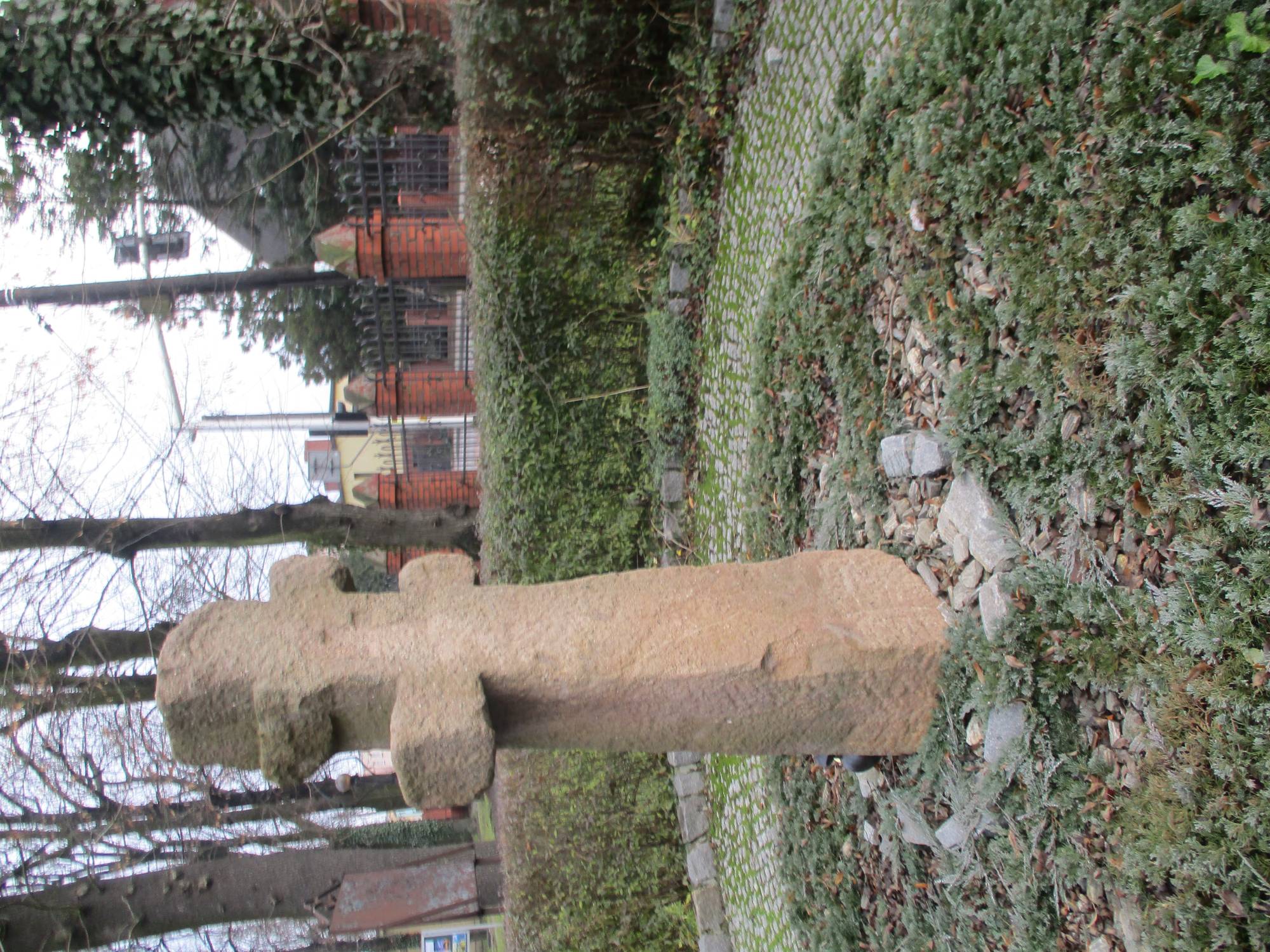
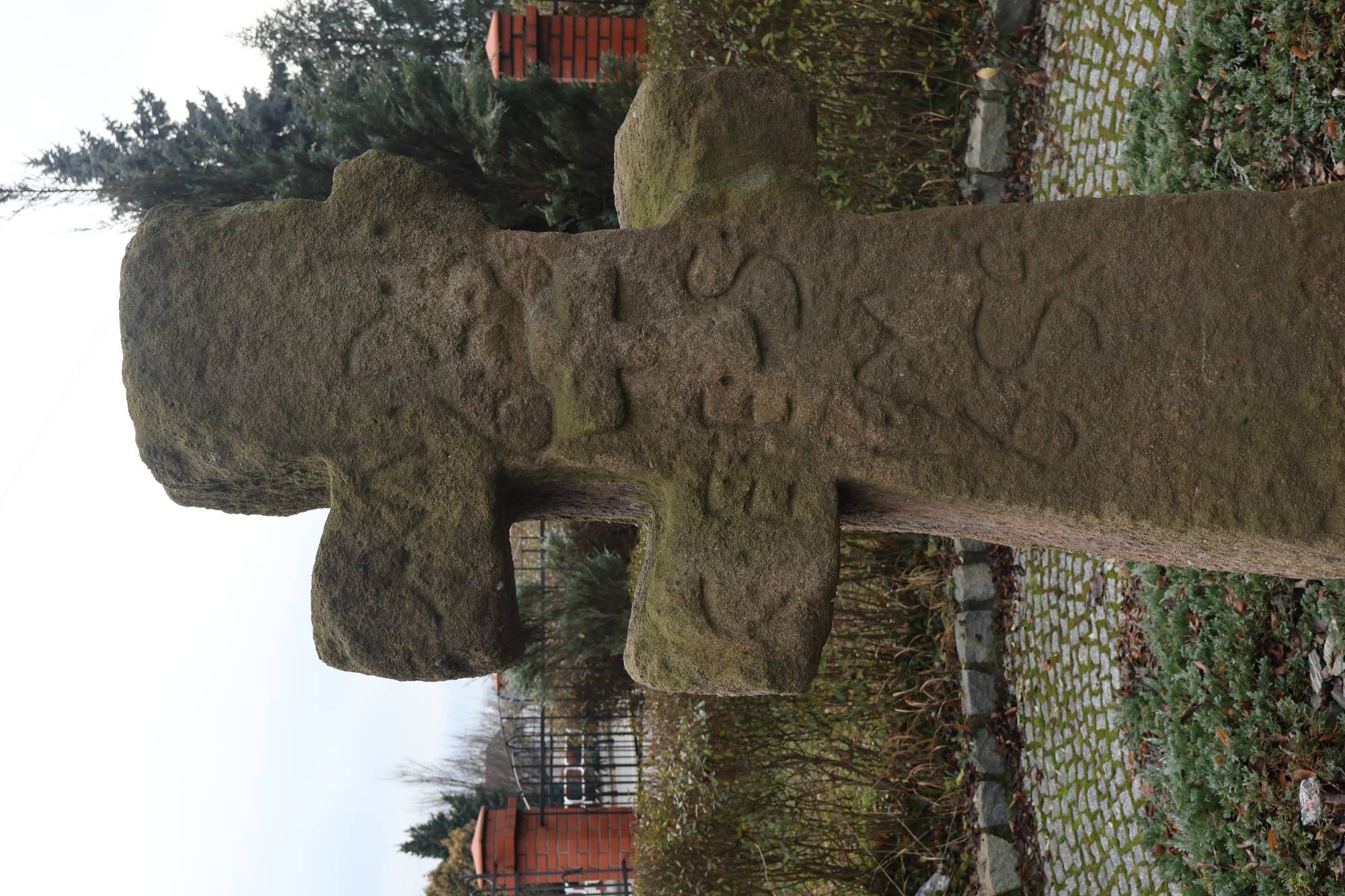
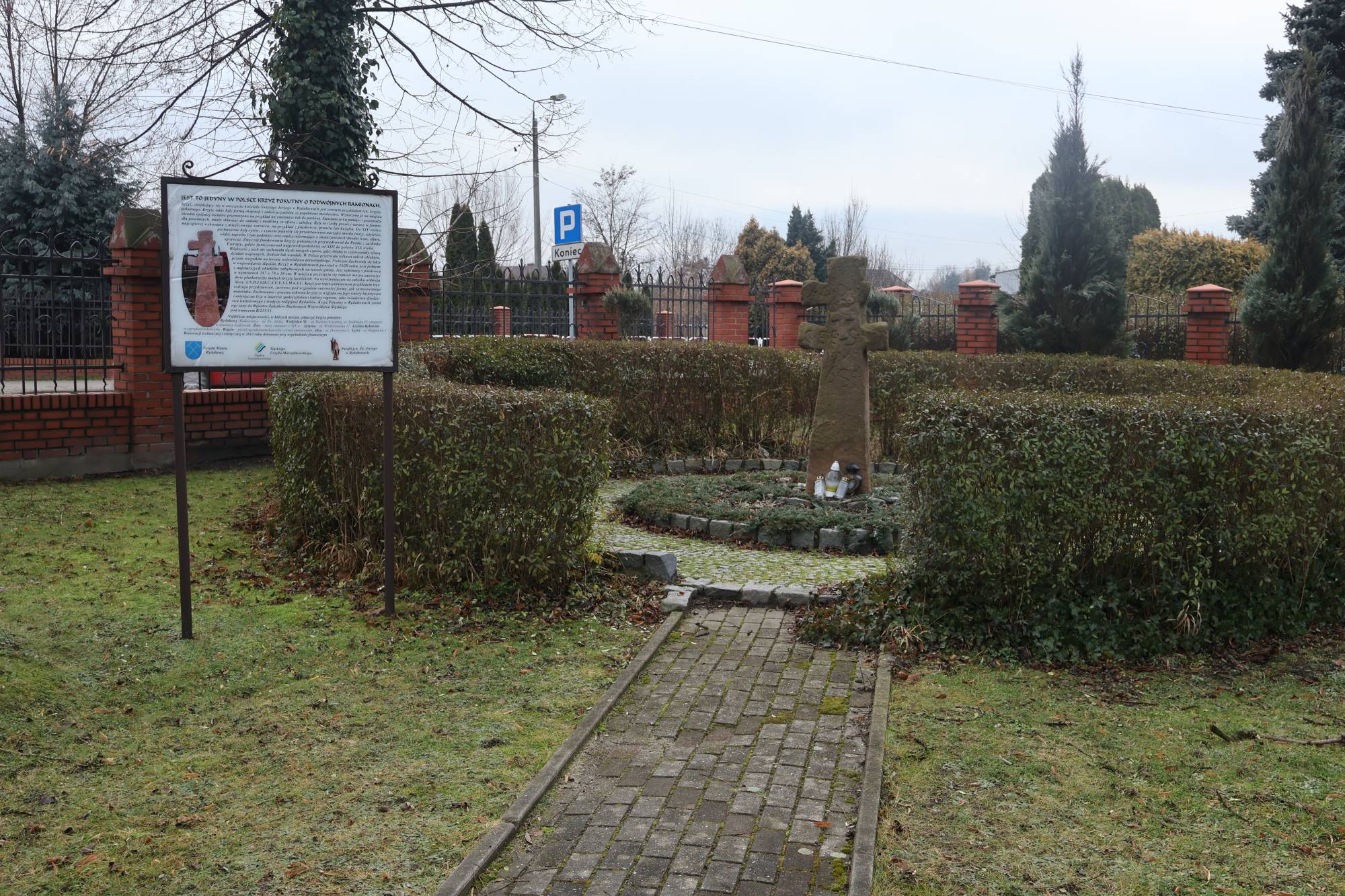

Behind the presbytery of the church dedicated to Saint George in Rydułtowy, there stands an impressive penitential cross. Originally it stood in the old cemetery on the western side of the church. It is 157 cm high and 70 cm in span of its arms, the thickness of which reaches 30 cm. It is made from a single block of local sandstone. Penitential crosses are rough stone forms hewn from monolithic rock blocks. Murderers erected them at the sites of crimes. This was a type of private or private-ecclesiastical penitential agreement concluded between the interested parties -- the family of the victim and the murderer. The term compositio came to be used in the Middle Ages to describe penitential treaties. The perpetrator of the crime was usually obliged to cover the costs of the victim's funeral, the court proceedings, and to provide the victim's family with a fixed penitential sum called 'główszczyzna' (compensation for a life), and also to support and educate the orphans of the slain. To the church, he was obliged to transfer a specified amount of wax and to commission a number of masses in the intention of the victim as determined by sentence. In addition to a pilgrimage to one of the contemporary sanctuaries, at the site of the crime the murderer had to erect, with his own hands, a carved cross or chapel as an expression of penitence. The uniqueness of the Rydułtowy cross lies in the fact that among the several dozen penitential crosses preserved in Upper Silesia, it is the only one in Poland and one of only four in Europe with two horizontal beams, a so-called patriarchal cross.