 Polski
 Cesky
Cesky
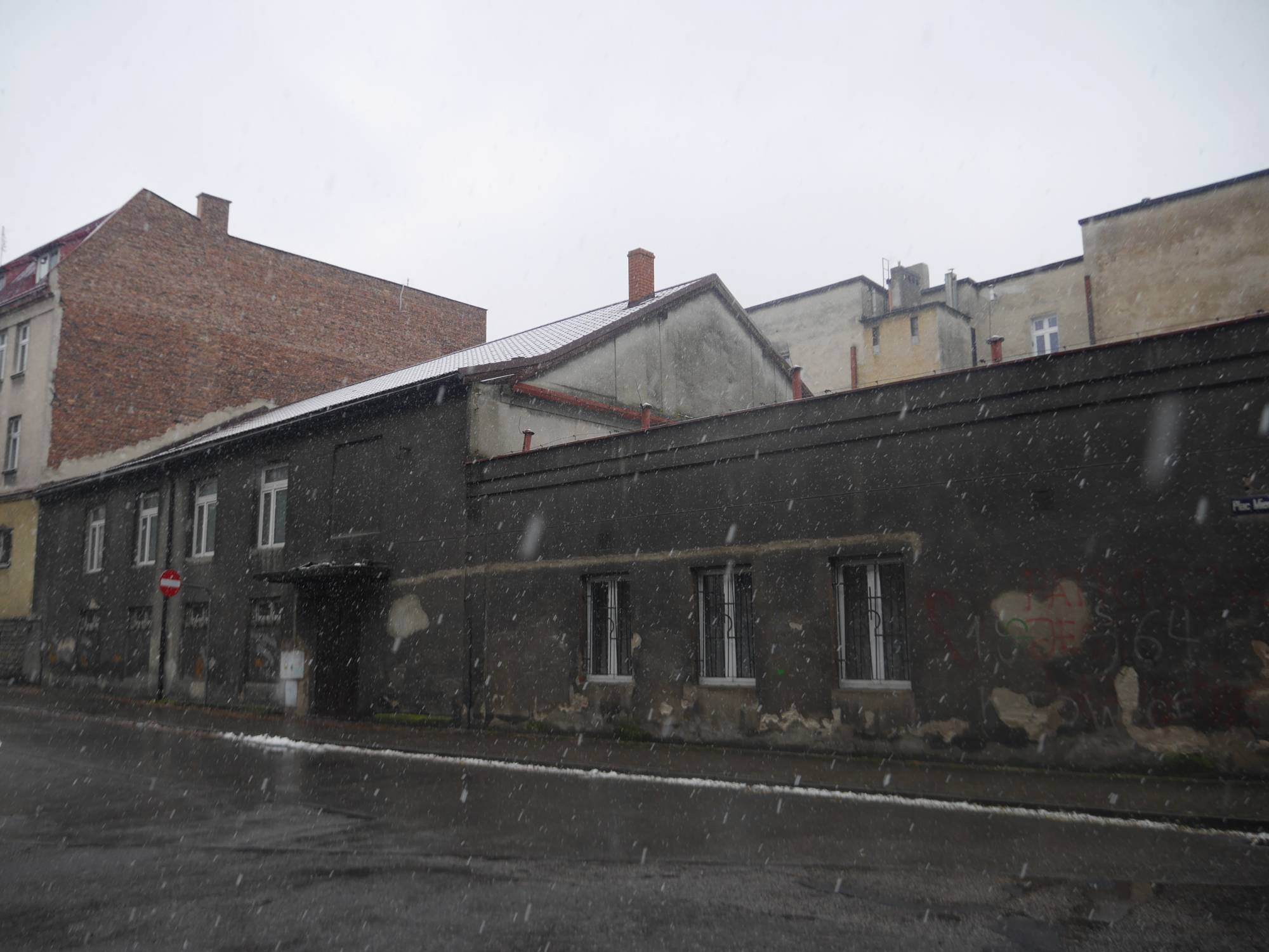
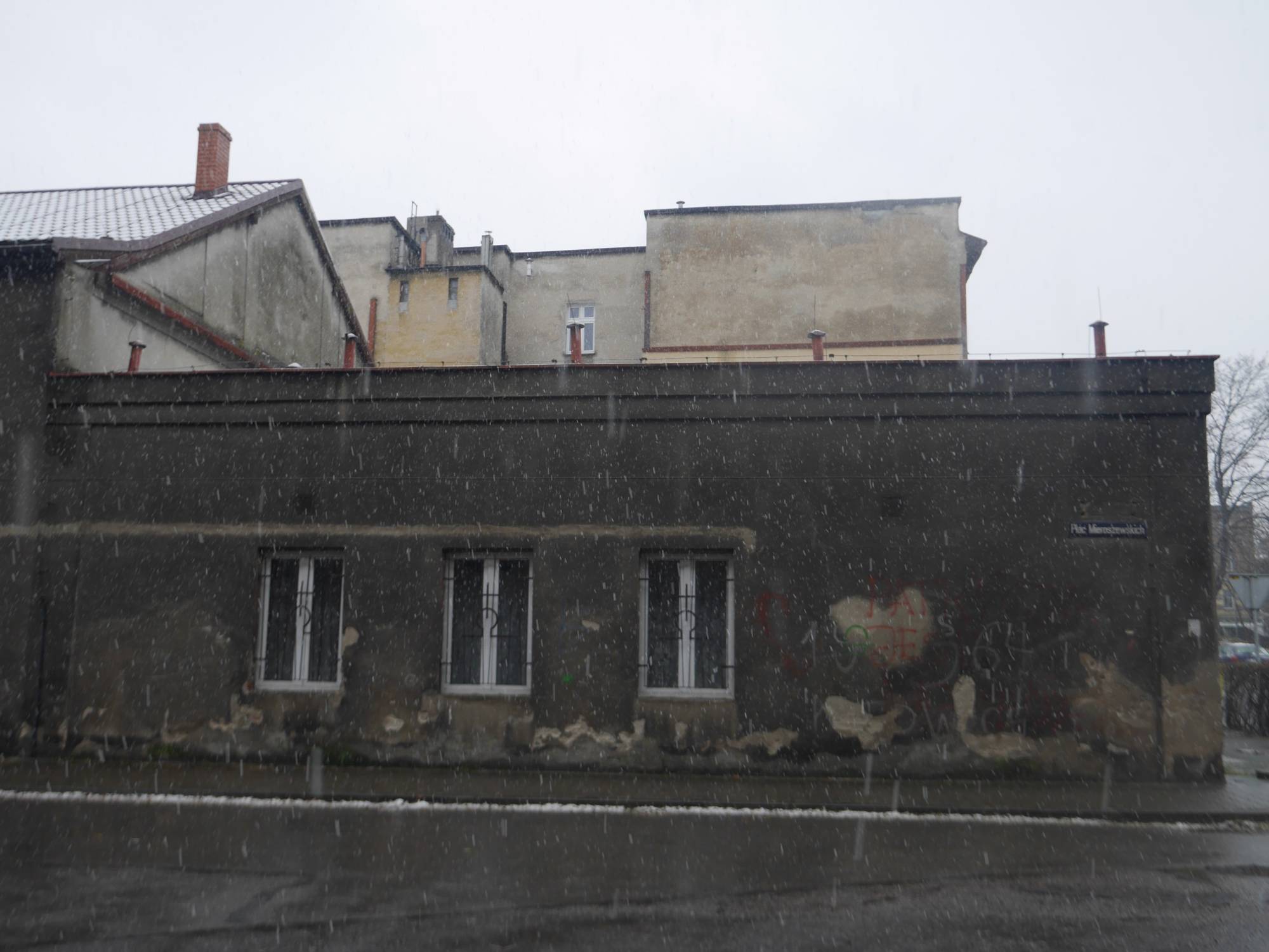

The old synagogue was built around 1826 at Synagogengasse Street (now the corner of Kollątaj and Mieroszewski Square Streets) and served the local Jewish community for nearly a hundred years. It was a small brick building, characteristic of 19th-century municipal synagogues in Silesia, serving prayer and educational functions. Worship services, Torah study, and meetings of the local community took place within its walls.
After the construction of a new, larger synagogue in 1927, the building was sold and adapted for secular purposes, including as a parish social center. Despite changes, it partially preserved its original interior layout, which allows for recognition of the building's historical function. The Old Synagogue was the center of Jewish life in Mysłowice, when at the end of the 19th century the community numbered approximately 900 people, and in the interwar period gradually declined.
Today, no typical religious symbols remain after the synagogue, but the building is an important testimony to the presence of Jews in Mysłowice. It is a place of memory for the culture and traditions of a community that for decades co-created the life of the city.
The mentioned new synagogue was located at Liberty Square, built between 1895 and 1899 according to the design of the Ignatz Grunfeld architectural firm from Charlottenburg. The building was maintained in Moorish style, and its form referred to architectural patterns known from Budapest, as well as nearby synagogues in Bielsko and Bytom.
The synagogue was distinguished by two high, octagonal towers topped with domes with spires, on which the Stars of David were visible. As a result of German actions, the synagogue was destroyed in September 1939.