 Polski
 Cesky
Cesky
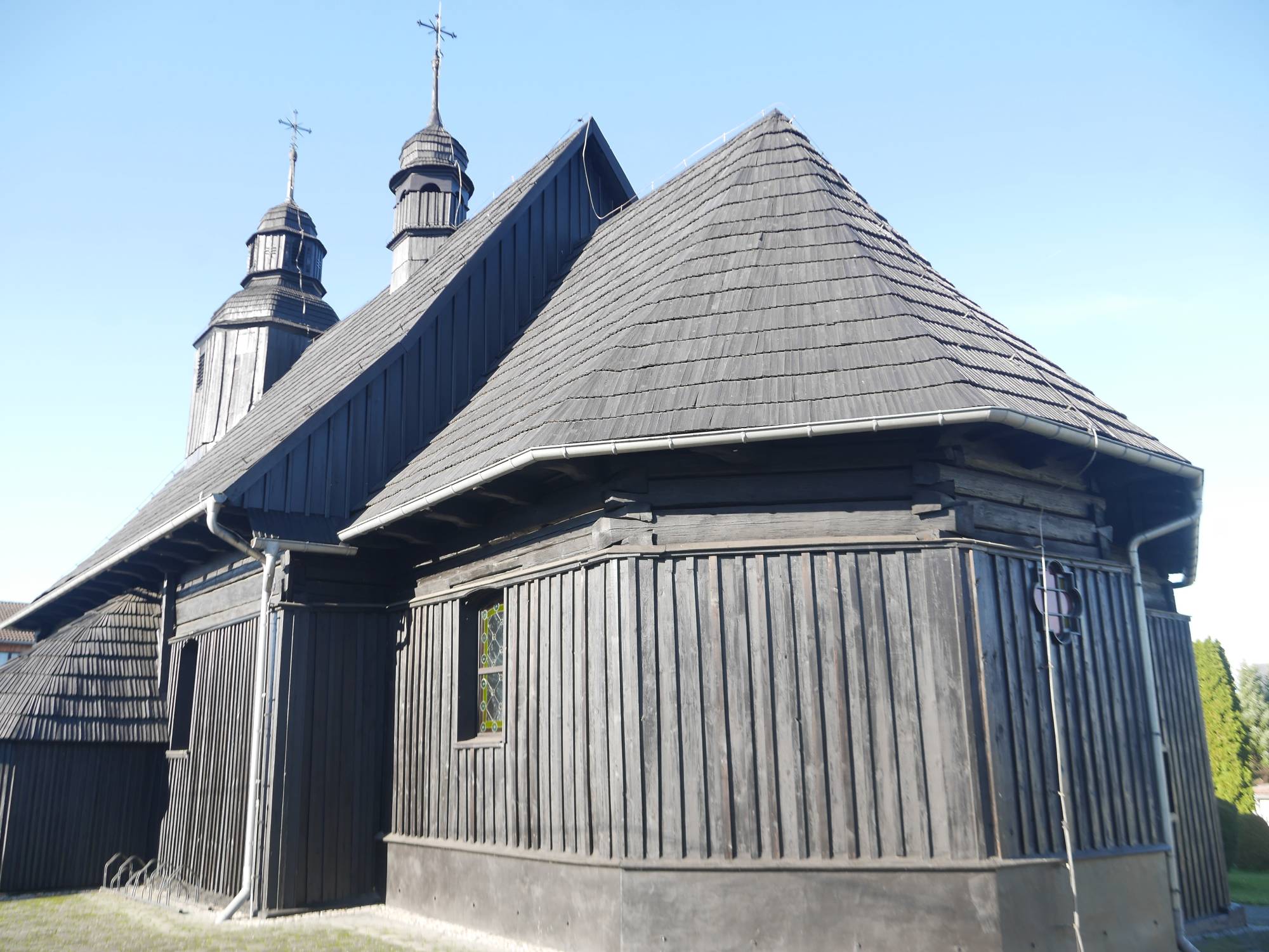

The first mention of this wooden temple dates back to 1500. The church was founded by the then-owner of the local knightly estate from the Salawa family. In the mid-17th century, the church was annexed to the parish in Zębowice [Zembowitz] and remained connected to it until the end of World War II. In 1817, the nave was expanded, and in 1836, the tower was rebuilt and raised, measuring 18.5 meters from then on. During a general renovation in 1899, the interior was plastered. Since 1945, the building has been secured multiple times with special preservatives to protect the wooden structure from moisture and weather conditions. Since 1966, the temple has operated as a fully independent parish church. This oriented, Baroque-style temple is a single-nave log structure. It features a presbytery smaller than the nave, closed on three sides with a side sacristy. The octagonal post-and-beam tower is crowned with a bulbous helm with a lantern and cross. Inside, the main altar and two side altars, a 19th-century pulpit, a baptismal font depicting the baptism in the Jordan, and classicist sculptures of saints are particularly noteworthy.